Rectal Prolapse

پرولاپس ركتوم

Introduction

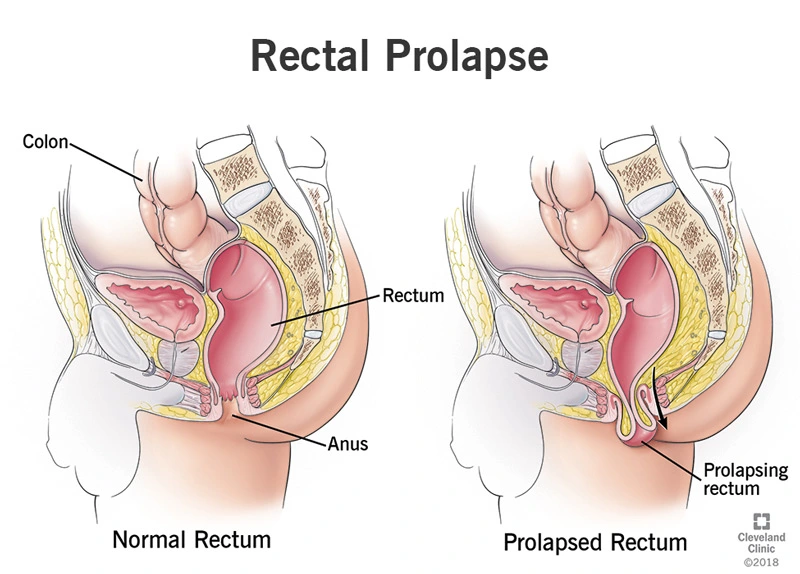
Rectal prolapse refers to the abnormal protrusion of part of the rectum through the anal canal.
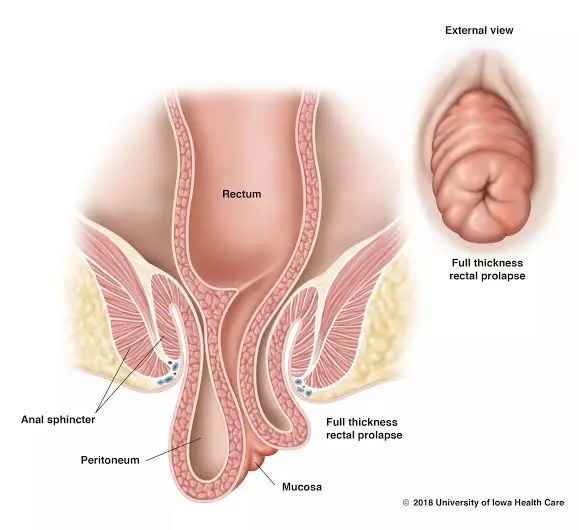
This protrusion may involve only the superficial mucosal layer or the full thickness of the rectal wall.
In some cases, internal intussusception occurs—where the rectum folds inward on itself without protruding externally. Rectal prolapse may be temporary at first but can become persistent over time, significantly affecting quality of life.

Anatomy

The rectum is the final segment of the large intestine, measuring about 12–15 centimeters in length, located just before the anal canal.
Its primary function is to temporarily store stool and provide the conditions necessary for controlled defecation.

Epidemiology and At-Risk Groups

  • Rectal prolapse is more common in women and is seen especially in middle-aged and elderly individuals.
  • There are two clearly defined high-risk groups: young children and adults over 50, particularly women with a history of multiple or complicated vaginal deliveries.
  • Other associated factors that increase the likelihood of prolapse include neurologic diseases that impair pelvic floor function, connective tissue disorders (such as collagen abnormalities), a history of pelvic or anal surgery, and long-standing constipation.

Important note: Having one or more risk factors does not necessarily mean prolapse will occur; these factors only increase the likelihood.
عمل جراحي آويزان كردن احشاي لگن

Pathogenesis (Why Do the Supporting Tissues Weaken?)

1. Obstetric Injury

  • Severe perineal tears during vaginal delivery—especially third- and fourth-degree tears that involve the anal sphincter or rectal mucosa—can damage the supportive structures and neural pathways.
    Risk factors for such tears include a prolonged second stage of labor, rapid expulsion of the fetus, use of forceps or vacuum extraction, a large baby, and multiple vaginal deliveries.
    If these tears are not treated properly or are inadequately repaired, the long-term risk of prolapse and incontinence increases.

2. Chronic Constipation and Prolonged Straining

  • Repeated increases in intra-abdominal pressure and persistent straining stretch and gradually displace the mesorectum and supporting ligaments.Over time, these tissues become “lax,” making it easier for the rectum to move forward.

3.Neurologic or Muscular Disorders

Diseases that weaken the nerves controlling the pelvic floor—such as spinal cord injuries or peripheral neuropathies—can impair the supportive tissues and disrupt the mechanisms that keep the rectum in place.

4.Surgery or Chronic Inflammation

Prior pelvic surgeries, adhesions, or chronic inflammatory conditions can alter the architecture of the supporting structures.

5.Systemic Tissue Weakness

Some individuals, due to connective tissue disorders or age-related decline, experience reduced collagen quality and weakening of connective tissues. This leads to decreased ligament strength and a significantly increased risk of prolapse.

Summary of the Mechanism

A combination of repeated straining, direct injury (such as childbirth trauma), and deterioration of supportive tissue quality gradually displaces the rectum from its normal position, eventually allowing it to protrude.

Clinical Presentation (Common Symptoms Reported by Patients)

Patients typically report one or more of the following:

  • Seeing or feeling a protrusion from the anus during bowel movements or straining
  • A sensation of incomplete evacuation or the need for manual pressure to reposition the tissue
  • Mucus discharge, moisture, or bright red blood on toilet paper
  • Gas or stool leakage due to sphincter injury or impaired continence
  • Pain or burning in the anal area—usually when the tissue becomes trapped or ulcerated
  • Occasionally, symptoms associated with other pelvic floor disorders, such as bladder prolapse or a sensation of vaginal bulging

When these symptoms become recurrent or progressive and begin to affect quality of life, prompt evaluation is important.
Diagnosis

عمل جراحي ركتوپكسي براي پرولاپس ركتوم

1. Detailed Clinical Examination

Examination is performed both at rest and during straining to visualize any prolapse.
A digital rectal examination assesses sphincter tone and checks for ulceration or inflammation.
This is the first and most important step in evaluation.

2. Fluoroscopic Defecography

A paste with stool-like consistency is inserted into the rectum by the physician or radiologist. The patient then sits on a special commode-like chair while the fluoroscopy machine records real-time imaging. The patient is asked to take several deep breaths and then strain so that the actual process of filling and emptying can be captured. This study shows when the prolapse occurs, whether internal intussusception is present, the depth of any rectocele, and the degree of perineal descent.
Preparation usually involves simple instructions from the radiology center or a light enema.

3. Dynamic MRI Defecography

Dynamic MRI evaluates the same process without radiation and with greater soft-tissue detail. MRI provides better visualization of the mesorectum, fascia, the relationship with the bladder and vagina, and internal intussusception.
For patients with multicompartment involvement, a history of prior surgery, or incontinence, MRI supplies essential information for surgical planning.
پرولاپس تمام ضخامت مقعد

4. Endoanal Ultrasound and Manometry

Endoanal ultrasound provides a direct image of the internal and external sphincters and can reveal childbirth-related tears or scarring. Manometry measures resting and squeeze pressures of the sphincters and shows how well the muscles are functioning.
Together, these findings determine whether the patient also requires sphincter repair.

5. Colonoscopy

Before surgery, colonoscopy is essential to rule out synchronous polyps or tumors. If the patient has not previously undergone colonoscopy, it is typically scheduled.

Treatment

Decision-making is based on the severity of symptoms, the type of prolapse (mucosal or full-thickness), sphincter function, and the patient’s overall condition. If the prolapse is mild and does not impair function, non-surgical management is attempted first. If the prolapse is full-thickness, symptomatic, or causing ulceration or incontinence, surgery is usually the best option.

Non-Surgical Treatments and Home Care (Low-Cost and Effective Measures)

  • Constipation control through diet: daily intake of at least 25–30 grams of fiber (fruits, vegetables, whole grains) and drinking 1.5–2 liters of fluids per day.
  • Stool softeners or gentle laxatives to prevent hard stools; a common example is polyethylene glycol, prescribed by a physician.
  • Avoid prolonged straining on the toilet; keep toilet time short.
  • Management of chronic cough: evaluation and treatment of lung infections or smoking cessation if the patient smokes. Daily or prolonged coughing increases intra-abdominal pressure and requires treatment.
  • Pelvic floor muscle training: simple Kegel exercises can be done at home — correct technique: in a comfortable position, tighten the muscles around the anal opening as if “trying to prevent passing gas,” hold for 5–10 seconds, then relax for 5–10 seconds. Repeat 10 times per set, 2–3 sets per day. If results are inadequate after several weeks or if technique is uncertain, specialized pelvic floor physiotherapy is helpful.

These measures are especially effective in early stages and for preventing progression.

Perineal and Abdominal Surgical Approaches

A) Perineal Approaches (Through the Anal/Perineal Route)

These procedures are generally chosen for older patients or those who cannot tolerate abdominal anesthesia. The two main techniques are:

  • Altemeier (Perineal rectosigmoidectomy):Removal of the rectum and a small portion of the sigmoid colon through a perineal incision, followed by joining the bowel ends from below.It is suitable for high-risk or very elderly patients.
    Recovery is faster and surgical stress is lower, though some reports note a higher recurrence rate.
  • Delorme Procedure: Used for mucosal prolapse or short-segment prolapse; the mucosa is removed, and the underlying muscle layer is plicated and sutured.
    It is less invasive but not suitable for full-thickness prolapse.

B) Abdominal Approaches (Through the Abdomen)

Abdominal procedures generally provide more durable results and lower recurrence rates in younger patients and those who are good candidates for anesthesia. The two major techniques are:

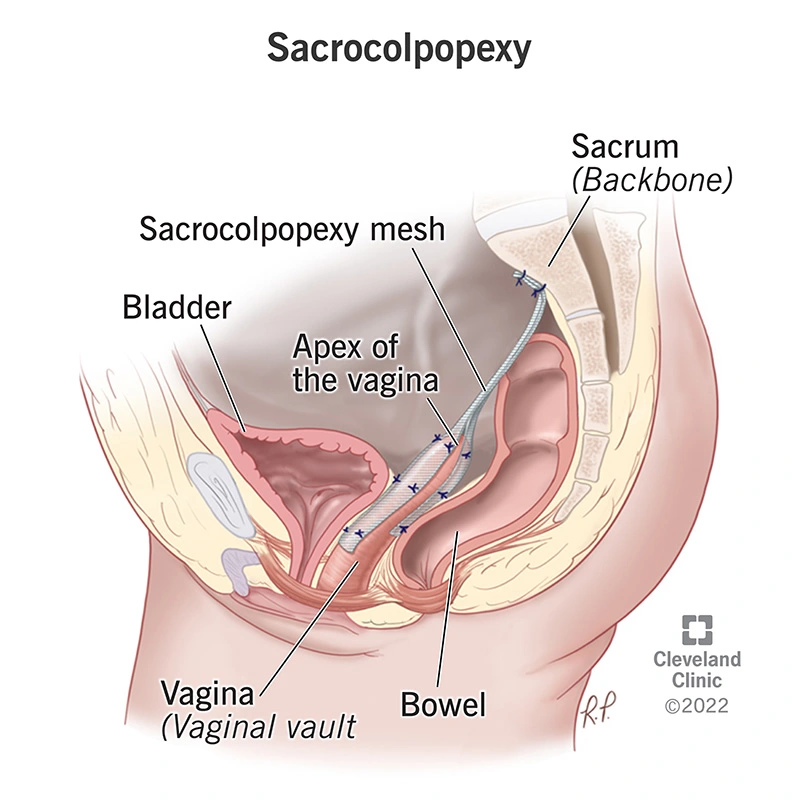
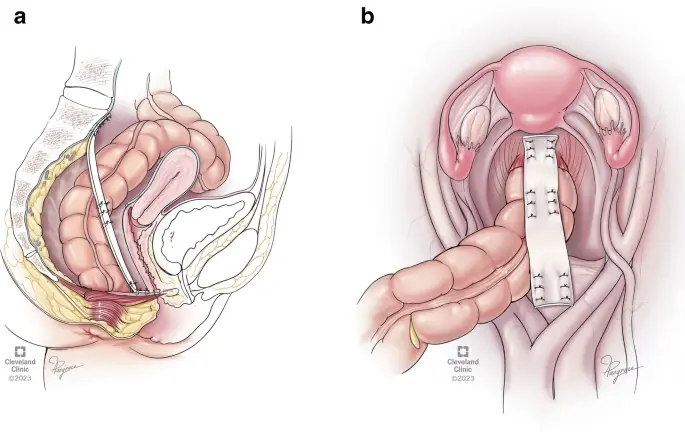
  • Ventral Mesh Rectopexy
  • Simplified description: The surgeon elevates the rectum anteriorly and secures it to the anterior pelvic wall using a lightweight synthetic or biologic mesh to maintain its normal position.
  • Why this method is popular: The posterior nerves—important for bowel function—are preserved, so the risk of new or worsening constipation after surgery is lower.
    If prolapse is accompanied by rectocele or enterocele, these can often be corrected simultaneously.
  • Advantages of laparoscopic/robotic approaches: Laparoscopy or robotic surgery provides magnification and fine instrumentation, allowing better visualization and preservation of pelvic nerves.
  • Technical note regarding mesh: The choice between synthetic and biologic mesh depends on patient factors and surgeon preference; each has advantages and risks that should be discussed with the patient.
  • Resection Rectopexy In this technique, in addition to rectopexy, a portion of redundant sigmoid colon is removed.
    It is suitable for patients with a long sigmoid colon and refractory constipation but carries risks related to the anastomosis (bowel connection), making surgeon experience essential.

Summary Comparison : Abdominal methods generally offer more stable functional outcomes, and laparoscopic/robotic techniques can reduce complications and length of stay.
However, final selection must be made by a multidisciplinary team after reviewing dynamic imaging and the patient’s overall condition.

C) Transanal and Stapled Procedures

In selected cases of mucosal prolapse or internal intussusception associated with obstructed defecation, techniques such as STARR or stapled mucosectomy may be helpful.
However, they are usually insufficient for full-thickness prolapse, and patients must be chosen very carefully.

When is surgery absolutely required? (Indications)

  • Full-thickness rectal prolapse that is significant and symptomatic
  • Prolapse associated with mucosal ulceration, bleeding, or chronic discharge
  • Severe functional impairment, such as incontinence or inability to evacuate, that has not responded to conservative treatment
  • Recurrent prolapse or prolapse with incarceration (trapped tissue), which can pose an emergency risk

Choosing the Surgeon and Treatment Team: Why Is Colorectal Expertise Important?

  • Successful, low-complication repair of rectal prolapse requires a surgeon experienced in laparoscopic/robotic techniques and familiar with the pelvic neuroanatomy.
  • An effective team includes a colorectal surgeon, a radiologist skilled in dynamic MRI/defecography, and a pelvic floor physiotherapist.When multi-compartment pelvic organ prolapse is present, collaboration with a gynecologist or urologist is essential.
  • Key point: Sphincter repair procedures and complex decision-making must be performed by a colorectal surgeon.

Preoperative Preparation and Postoperative Care — What Patients Need to Know

  • A colonoscopy is usually required before surgery to evaluate the entire colon.
  • Dynamic imaging (MR or fluoroscopic defecography) is necessary for precise surgical planning.
  • If manometry or endoanal ultrasound shows a sphincter tear, a combined plan for sphincter repair and prolapse correction is arranged.
  • Day-of-surgery preparation: adjusting or stopping blood thinners according to the surgeon’s instructions, routine fasting, and following all preoperative guidelines from the care center.
  • Hospital stay and recovery: with laparoscopic techniques, hospitalization is typically shorter (usually 1–3 days depending on the procedure and patient condition).
    Less pain, smaller incisions, and quicker return to activity are advantages of minimally invasive surgery.
    Perineal procedures also offer a relatively short recovery, though bowel habits may vary afterward.
  • Post-discharge care: soft diet until healing progresses, stool softeners to avoid straining, sitz baths for local comfort, and pelvic floor physiotherapy if needed.
    The surgeon will determine the appropriate timing for returning to work and resuming heavy activity.

Frequently Asked Questions About Rectal Prolapse

Does rectal prolapse always require surgery?

No—if the prolapse is very mild and asymptomatic, surgery is not necessary. However, full-thickness and symptomatic prolapse usually requires surgical treatment.

For appropriate patients, yes.
Laparoscopic or robotic techniques provide enhanced visualization and magnification, along with finer instruments that facilitate preservation of pelvic nerves.
Postoperative pain is typically less, and return to daily activities is faster.
The final decision depends on the patient’s condition and the experience of the surgical center.

If you experienced a third- or fourth-degree tear, or if you have had symptoms of leakage or a sensation of prolapse since childbirth, you should definitely consult a colorectal surgeon.
Timely primary repair and proper follow-up significantly improve outcomes.

A high-fiber diet with adequate fluids, stool softeners when needed, avoiding prolonged straining, and treating chronic cough are important steps.
Performing pelvic floor exercises at home is also helpful.

Many patients experience significant improvement, although in some cases minor changes in bowel habits may persist.
The care team will discuss realistic expectations with you before surgery.

Summary for Patients

An anal fissure is a painful tear in the skin of the anus, usually accompanied by pain and bleeding.
Most cases improve with dietary changes, stool softeners, and warm baths.
If it does not heal within 6–8 weeks, treatments such as medicated ointments, Botox injection, or a minor procedure called lateral internal sphincterotomy may be recommended.
Most patients recover with appropriate therapy; choosing the right treatment depends on a thorough examination and consultation with a colorectal surgeon.