Bladder Prolapse

پرولاپس مثانه

Introduction

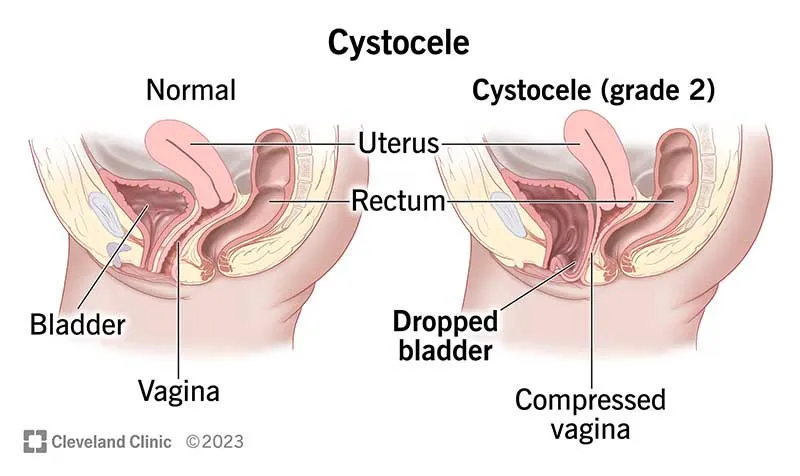
Cystocele refers to the downward displacement or prolapse of the anterior wall of the vagina, causing a portion of the bladder to bulge or herniate into the vaginal wall. In simple terms, the wall that supports the bladder weakens, and the bladder moves from its natural position toward the vagina.

Anatomy

Cystocele and pelvic organ prolapse are common in women and tend to increase with age. Depending on the study, signs of prolapse are observed in a significant percentage of women when examined, but not all cases are symptomatic. This means many cases are only detected during an examination, with the patient not experiencing pain or discomfort. Demographic factors and pregnancy/childbirth play an important role in the prevalence of this condition.

Etiology (Causes and Pathophysiology)

Cystocele is the result of weakness or damage to the tissues and supporting structures of the bladder and vagina. The main causes include:

  • Natural Childbirth and Perineal Damage: The passage of the baby through the birth canal can stretch or tear the muscles, ligaments, and nerves that support the pelvic organs.
  • Multiple Pregnancies or Heavy Deliveries: Increases the likelihood of injury to the pelvic floor structures.
  • Chronic Increased Intra-abdominal Pressure: Chronic constipation and prolonged straining, chronic coughing (e.g., in smokers or those with chronic lung disease), and obesity—over time, these factors contribute to the stretching and weakening of supportive tissues.
  • Tissue Changes Associated with Menopause: Decreased estrogen levels lead to thinning and loss of elasticity in the mucosal and connective tissues.
  • Genetic Factors and Connective Tissue Weakness: Some individuals have a genetic predisposition to weak connective tissue and are more susceptible to prolapse.

Pathogenesis (Mechanism of Disease)

In a healthy state, a strong layer of muscle and connective tissue (pubocervical fascia) supports the bladder within the pelvic cavity. When this fascia or the pelvic floor muscles become weakened or torn:

  1. During intra-abdominal pressure (e.g., coughing or straining), this area bulges outward.
  2. The initial mucosal bulge then gradually becomes larger and more persistent, and the patient may feel a “lump in the vagina” when standing or straining.

This process takes years and is a combination of acute damage (e.g., from difficult childbirth) and gradual factors (such as constipation, obesity, and menopause).
پرولاپس-احشاي-لگن

Clinical Manifestations

Symptoms can range from mild to severe. The most common complaints include:

  • Feeling of Pressure or Heaviness in the vagina or perineum.
  • Feeling or Seeing a Protrusion (bulge) inside or outside the vaginal opening, especially when coughing or straining.
  • Urinary Leakage or Incontinence, or an urgent need to urinate (if accompanied by incontinence).
  • Feeling of Incomplete Bladder Emptying after urination.
  • Pain or Discomfort during sexual intercourse.

The severity of symptoms does not necessarily correlate with the size of the protrusion; some women with small prolapses experience significant issues, while others with larger prolapses may have few symptoms.

Diagnosis

1) Detailed Medical History

Questions should focus on the onset of symptoms, association with pregnancies, constipation, history of pelvic surgery, medications, and impact on quality of life.

2) Targeted Physical Examination

The doctor will ask you to bear down (Valsalva maneuver) to observe the prolapse. A vaginal internal examination is performed to visualize the location of the bulge and assess any accompanying elements (e.g., simultaneous rectocele/uterine prolapse).

3) Official Measurement — POP-Q System

POP-Q is a set of simple measurements at defined vaginal points that helps quantify the severity of prolapse; this standard is useful in reporting and comparing surgical outcomes. (Although the name is technical, its purpose is to precisely document the location and severity of the prolapse to improve treatment planning.)

4) Functional Tests

If urinary problems are present, urodynamics may be needed to assess the type of incontinence or outlet obstruction (especially when surgery is planned, as some surgeries may worsen or improve urinary symptoms).

5) Imaging

Clinical diagnosis is usually sufficient, but in complex cases or when multiple organs are prolapsing or there are unusual symptoms, imaging can be helpful.

  • Dynamic Pelvic MRI: Imaging taken during resting, straining, and voiding phases that simultaneously shows soft tissue structures (bladder, vagina, rectum, mesorectum, and fascia); it is very useful for diagnosing multi-compartment prolapse and planning complex surgeries.
  • Translabial Ultrasound: More accessible and used to visualize anterior prolapses and their relationship with the bladder; it can be helpful when MRI is unavailable.


Treatment

A) Non-Surgical Treatment

  1. Behavioral Education and Modification

  • Controlling Constipation: Increasing fiber intake, drinking more fluids, and using stool softeners.
  • Avoiding Prolonged Straining on the toilet.
  • Cough Control and Weight Management in case of obesity.
  1. Pelvic Floor Muscle Training (PFMT / Kegel Exercises) — How to Perform?

  • Goal: Strengthening the muscles that support the bladder and vagina.
  • Simple and Practical Method: Imagine trying to stop the flow of urine; the muscles you contract are the pelvic floor muscles. Tighten them firmly, hold for 3–5 seconds, then relax for 5–10 seconds. Repeat 8–12 times per session, three times a day. As you get stronger, increase the duration of the contraction.

Important Notes:Correct technique is essential; some women may mistakenly contract abdominal or buttock muscles instead of the pelvic floor. It is recommended to have initial sessions with a pelvic floor physiotherapist to personalize the technique and plan. Guided programs have shown to be more effective.

  1. Pessary — A Mechanical Option for Bladder Support

  • Description: Silicone or plastic devices placed inside the vagina to prevent the bulging.
  • Common Types: Ring pessary, Gellhorn pessary (with stem/solid for moderate to severe prolapse).
  • Advantages: Quick, non-surgical, and reversible. Suitable for older women or those who are not ready for surgery or wish to try before opting for surgery.
  • Care Tips: The pessary should be fitted by a doctor or nurse (size and type selection). Patients or the team are trained to change, clean, and care for the pessary. Regular check-ups are required (e.g., every 3–6 months or as instructed). If pain, bleeding, or foul discharge occurs, immediate consultation is needed.

  1. Topical Estrogen (Cream or Suppository) for Postmenopausal Women

  • Helps restore mucosal tissue and improve its quality, especially when vaginal tissue is thin. Usually used alongside pelvic floor exercises and local care.

B) Surgical Treatment

  1. Anterior Colporrhaphy (Vaginal Repair)

  • Procedure: The surgeon accesses through the vagina, opens the mucosa, brings together the weak submucosal tissue or fascia, and tightens it to reposition the bladder.
  • Advantages: Direct approach, no abdominal incision, generally shorter recovery compared to abdominal surgery.
  • Disadvantages/Limitations: In some cases, recurrence may occur, especially if tissue weakness is significant.
  1. Mesh Augmentation in Anterior Repair

  • For cases where the base tissue is very weak, mesh may be used. It’s important to know that vaginal meshes have previously been associated with complications, including infection, mesh exposure, and sexual pain. Therefore, the use of vaginal mesh should be done cautiously, based on the center’s experience, with a detailed risk/benefit discussion.
  1. Laparoscopic Sacrocolpopexy

  • In cases where bladder prolapse is accompanied by vaginal prolapse or when long-term durable repair is desired, a laparoscopic procedure is performed where a mesh is placed from the anterior/posterior vaginal wall to the sacrum, thereby restoring the height and support of the vagina.
  • Advantages: More durable long-term results, better visualization of pelvic anatomy for the surgeon, less pain, quicker recovery, and potentially better nerve protection with camera magnification. This method is a good option for patients who want better sexual function and long-term support, but it requires an experienced surgeon and specialized equipment.

Role of the Colorectal Surgeon

  • Coordination of a multidisciplinary team, including: a gynecologist/urologist (or urogynecologist), pelvic floor physiotherapist, and in some cases, a urologist, is the responsibility of the colorectal surgeon, especially when rectocele or rectal abnormalities are present.
  • The colorectal surgeon is responsible for conducting a thorough assessment, explaining options, planning appropriate surgery, performing the procedure with neuroprotective techniques, and providing post-operative care instructions.

Note: Decision-making should be shared with the patient; the priority is an effective, minimally invasive approach suited to the individual’s condition.

Frequently Asked Questions about Bladder Prolapse

Do I Always Need Surgery?

No — if the symptoms are mild, you can start with pelvic floor exercises, pessary use, or conservative care first. Surgery is typically considered if these methods do not provide relief or if symptoms become severe.

As if you are trying to stop the flow of urine for a few seconds: Contract the muscles, hold for 3–5 seconds, then relax; repeat 8–12 times per session, 3 times a day. To ensure proper technique, consult with a pelvic floor physiotherapist.

The doctor will select the appropriate size and insert it in the office. The procedure is usually painless or causes only minimal discomfort. You will need to learn how to maintain the pessary and when to replace it, with regular follow-up visits to ensure proper fit and function.

Yes, having a cystocele does not necessarily prevent pregnancy or childbirth. However, it is important to consult with your healthcare provider for proper management during pregnancy and delivery. They may recommend certain precautions or treatments to prevent further weakening of pelvic structures during childbirth.

It depends on the type and severity of the prolapse, the patient’s age, preferences, and the experience of the team. Vaginal repair is suitable for more localized cases; however, for multi-compartment prolapse or when long-term durability is required, laparoscopy/sacrocolpopexy may offer more durable benefits. The final choice is made through a team discussion.

Summary for Patients

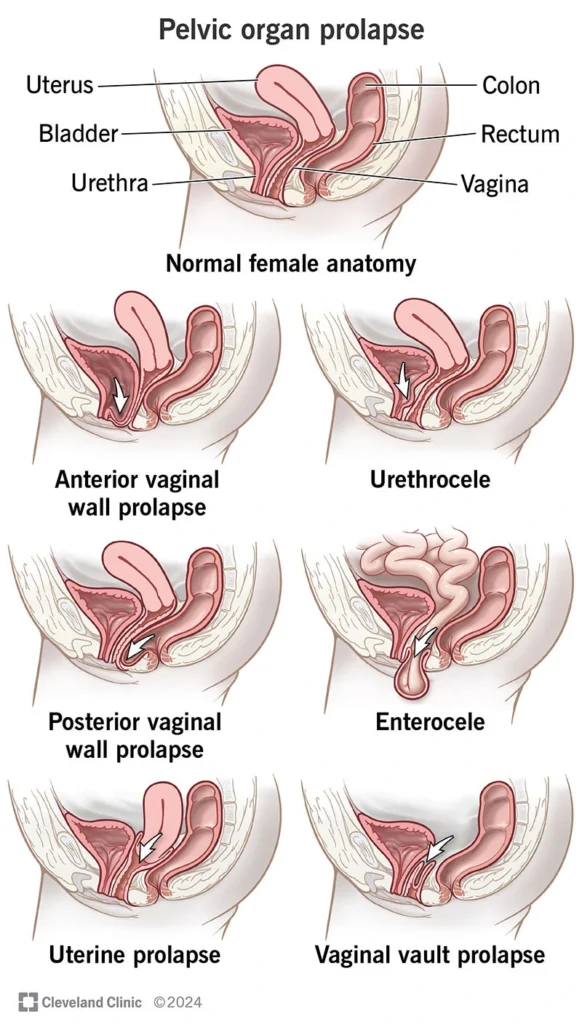
Cystocele refers to the prolapse of the bladder into the vagina, which causes feelings of pressure, a bulge inside the vagina, and sometimes urinary problems. Treatment ranges from the simplest methods (diet, Kegel exercises, pessaries) to minimally invasive or open surgeries. Most women experience significant improvement with proper care and the right choice of treatment. The decision regarding treatment is made based on the severity of symptoms, your preferences, and a thorough examination.