Anal Cancer

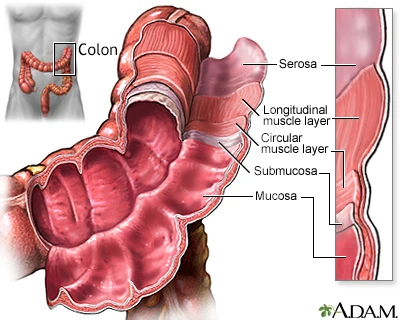
لایه های آناتومی روده بزرگ

Introduction

Anal cancer is the uncontrolled growth of malignant cells in the anal canal or the surrounding perianal area. The most common type is squamous cell carcinoma, which arises from the cells lining the inner surface or skin of the anus.
This disease may present with a mass, a persistent ulcer, or bleeding in the anal region. Treatment typically involves a combination of radiation therapy, chemotherapy, and occasionally surgery.
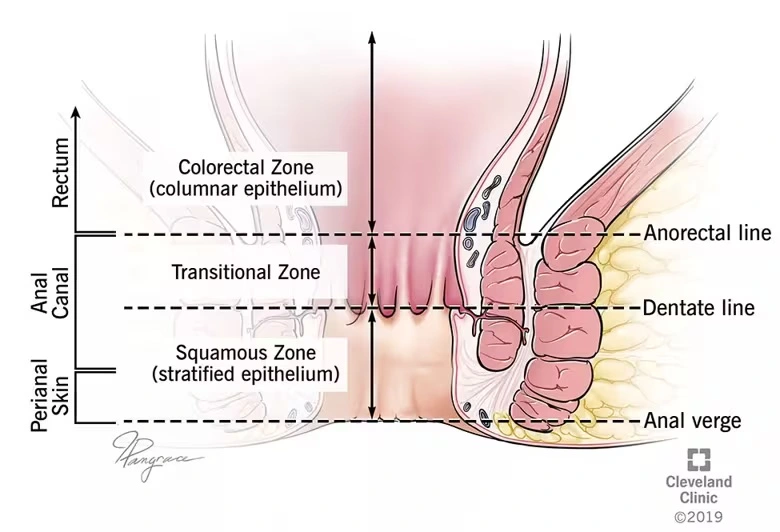
آناتومي مقعد

Anatomy

The anal canal is short and extends from the inner mucosal lining to the perianal skin. Surrounding the canal are lymphatic channels and glandular structures that may serve as pathways for tumor spread. Additionally, important lymph nodes are located on both sides in the inguinal region (groin), which may become involved.
Understanding whether the tumor originates within the anal canal or on the perianal skin, as well as the status of regional lymph nodes, is essential for selecting the appropriate treatment.

Epidemiology (Prevalence and Risk Factors)

  • Anal cancer most commonly occurs in middle-aged adults, though it can appear at other ages as well.
  • High-risk groups include men who have sex with men (MSM), individuals with HIV or other forms of immunosuppression, people with multiple sexual partners, and those with chronic infection by high-risk human papillomavirus (HPV) types.

Unlike colon and rectal cancers, anal cancer is far less common and accounts for less than 2% of all lower gastrointestinal malignancies. Globally, its incidence is rising and is strongly associated with HPV infection and high-risk sexual behaviors.In Iran, precise national statistics are limited, but available reports suggest that the incidence is lower than in Western countries. Nevertheless, the increasing prevalence of HPV-related cases indicates that its numbers may rise in the coming years.

Etiology (Causes and Disease Mechanisms)

  • Human papillomavirus (HPV) — the most important factor, particularly high-risk types such as HPV-16, which is strongly associated with squamous cell carcinoma.
  • Smoking — increases the risk.
  • Immunosuppression — including HIV infection or the use of immunosuppressive medications.
  • Multiple receptive anal sexual exposures or early initiation of sexual activity.
  • Chronic inflammatory or dermatologic conditions of the anal region — in rare cases.

Key point: HPV infection alone does not necessarily cause cancer, but it significantly increases the risk; therefore, surveillance in high-risk groups is important.

What can be done to prevent anal cancer?

  • HPV vaccination — the most effective preventive measure. Receiving the vaccine before the onset of sexual activity significantly reduces the risk of infection with many HPV types, including those associated with cancer. It is recommended for adolescent girls and boys in many countries.
  • Safe sexual practices — reducing the number of sexual partners and proper condom use can lower the risk of transmission. (Condoms do not provide complete protection because HPV can spread through skin-to-skin contact.)
  • Smoking cessation and managing immunosuppression when possible.
  • Surveillance of high-risk groups (such as HIV-positive individuals or MSM) using methods recommended by healthcare providers. In these groups, screening may include anal cytology or specialized examinations.

Pathogenesis (Mechanism of Disease Development)

The process typically follows this pattern:
Chronic infection with high-risk HPV types leads to cellular changes in the superficial lining of the anal canal (disruption of pathways that regulate cell division and DNA repair). Over time, some of these changes progress to cellular abnormalities and eventually malignancy.
This progression may take years, which is why prevention and surveillance in high-risk groups are essential.

Clinical Presentation

  • Bleeding or spotting from the anus (not always accompanied by pain)
  • A persistent mass or ulcer around the anus, which may appear as a small sore or a firm lump
  • Pain or a feeling of tightness during bowel movements, or changes in bowel habits
  • Foul-smelling discharge, soiling, or chronic anal discharge
  • Signs of swollen inguinal lymph nodes, such as a lump under the skin, pain, or firmness in the groin
  • Occasional fever or weight loss in more advanced stages

Diagnosis

1. Medical History and Clinical Examination

  • A thorough inspection of the anorectal region, palpation of the inguinal lymph nodes, and assessment of general symptoms.
  • A digital rectal examination (DRE) is performed to evaluate the mass and assess possible deep tissue involvement.

2. Endoscopy / Anoscopy with Biopsy

  • Direct visualization of the anal canal using a small scope, followed by biopsy of the lesion for pathological evaluation. Pathology determines the cancer type (e.g., squamous cell carcinoma) and its grade.

3. Pelvic MRI

  • MRI is the best tool for assessing tumor size, depth of invasion into the anal canal wall, involvement of the sphincters, regional lymph nodes, and relation to adjacent structures.
    A detailed MRI report—indicating tumor location, relation to sphincters, and suspicious lymph nodes—is essential for treatment planning.
  1. Endoanal Ultrasound

  • Useful in selected cases for more precise evaluation of tumor depth and sphincter involvement, especially when MRI is unavailable or inconclusive.
  1. CT Scan (Chest–Abdomen–Pelvis) or PET-CT

  • Used to detect distant metastases (e.g., in the liver or lungs) and for complete staging. PET-CT is helpful when lymph node involvement is uncertain or when more detailed staging is required.
  1. Blood Tests and Additional Assessments

  • Basic tests include CBC and liver/kidney function tests to assess overall health. HIV testing is recommended in many cases because it influences treatment decisions and prognosis.
  1. HPV Testing

  • Tissue samples or molecular tests can be used to detect HPV types. This information may provide useful insights for prognosis and research.

Treatment

Treatment decisions are made within a multidisciplinary team, including a colorectal surgeon, radiation oncologist, medical oncologist, radiologist, and pathologist.

1) Standard Initial Treatment — Chemoradiation for Squamous Cell Carcinoma

  • Radiation therapy combined with chemotherapy agents used as radiosensitizers—typically 5-FU (fluorouracil) and Mitomycin C—is the standard first-line treatment for most anal cancers.
  • Goal: Eradication of the local tumor while preserving the anus and sphincter function as much as possible, thereby avoiding the need for complete removal of the rectum and anus.
  • This regimen, sometimes referred to as the Nigro protocol, often offers a high chance of cure with sphincter preservation.

2) Surgery

  • Abdominoperineal resection (APR): This major operation removes the rectum and anus and results in a permanent colostomy.It is now rarely used as initial treatment and is mainly reserved as salvage surgery when chemoradiation fails or when local recurrence occurs.
  • Local excision: Considered only for very small, superficial tumors meeting strict criteria. This option requires careful evaluation and precise patient selection.
  • Inguinal lymph node involvement: Regional radiotherapy is often sufficient. In select cases, surgical removal of lymph nodes may be necessary.

3) Treatment of Metastatic Disease

  • If metastases are present (e.g., in the liver or lungs), systemic chemotherapy and/or targeted therapy or immunotherapy may be considered, depending on tumor characteristics and patient factors.
    In selected, limited cases, metastasectomy may be performed with curative intent, but this requires complex, team-based decision-making.

4) Advanced Radiation Techniques

  • Modern methods such as IMRT (Intensity-Modulated Radiotherapy) allow delivery of effective radiation doses to the tumor while sparing surrounding normal tissues (e.g., skin, bladder, healthy bowel, and pelvic nerves), thereby reducing side effects.
    The radiation technique should be chosen in a well-equipped center and managed by an experienced radiation oncologist.

5) Importance of Multidisciplinary and Personalized Decision-Making

  • Each patient has unique circumstances—tumor stage, HIV status, comorbidities, and individual priorities regarding bowel and sexual function. For this reason, treatment plans must be discussed within the multidisciplinary team and tailored to the patient’s needs.

Post-Treatment Follow-Up

  • Clinical examination and anorectal evaluation every 3 months during the first two years, then every 6 months until year five, and annually thereafter (adjusted based on the care team’s recommendations).
  • Imaging studies (CT or PET-CT) depending on the initial stage and clinical symptoms; typically performed during the first year and repeated if there are concerns.
  • Supportive care, including management of functional complications, pelvic floor rehabilitation, nutritional counseling, and psychological support as needed.
  • For HIV-positive patients, closer monitoring is required, and HIV treatment should be optimally managed.

Role of the Colorectal Surgeon

  • Active involvement in the multidisciplinary team from the outset (evaluating operable cases and contributing to treatment decisions).
  • Performing salvage procedures or complex pelvic surgeries (such as APR) when necessary, with careful preservation of surrounding structures and planning for stoma formation and tissue reconstruction.
  • Providing preoperative counseling regarding functional outcomes, rehabilitation options, and postoperative care.
  • Working closely with radiation oncologists and medical oncologists in treatment planning.

Frequently Asked Questions About Anal Cancer

Is anal cancer contagious?

The cancer itself is not “contagious.”
However, its main risk factor—HPV—is a sexually transmissible virus.
HPV infection in a person means the virus can be transmitted, but cancer develops only after a long, multi-step process, and HPV infection alone does not mean cancer will occur.

No. Most HPV infections clear on their own or cause only benign conditions such as warts.
Only a subset of infections—especially those involving high-risk HPV types and persisting over time—can lead to precancerous changes and eventually cancer.

No. In many cases, the initial combination of radiation therapy and chemotherapy can eradicate the tumor while preserving the anus and sphincter.
Removal of the anus (APR) is usually necessary only when the tumor does not respond adequately to initial treatment or when a local recurrence occurs.

The HPV vaccine is preventive. It has been proven to prevent initial infection with the HPV types included in the vaccine.
In some individuals, it may reduce the risk of new HPV infections, but its most clearly established benefit is in people who have not yet been exposed to those HPV types.
Consulting a physician can help determine what is appropriate in your specific situation.

People living with HIV may present with more advanced tumors or may respond differently to treatment.
Optimal control of HIV and close coordination among specialists are essential.
More frequent and careful follow-up is recommended in many centers to ensure the best outcomes.

Yes. Pelvic radiotherapy can affect fertility, for example by reducing ovarian reserve or damaging sperm production.
If future fertility is important to you, discuss fertility preservation options—such as sperm freezing or egg/embryo freezing—before starting treatment with your care team and a fertility specialist.

If you notice a new lump or persistent ulcer in the anal area that does not heal within a few weeks, unusual bleeding, severe pain, swelling in the groin, or general symptoms such as fever or rapid unexplained weight loss, you should seek medical attention promptly.

Summary for Patients

Anal cancer is a condition that, in many cases, can be controlled—or even cured—when detected early and treated appropriately.
HPV infection is a major contributing factor and can often be prevented through vaccination and safe sexual practices.

Treatment decisions are usually multidisciplinary and aim to achieve the best chance of cure while preserving anal function whenever possible.

If you notice a new lump or ulcer, or experience changes in bowel habits or bleeding, seek medical attention as early as possible.